We test against numbers,
not vibes.
Vena isn’t a render with a waitlist. We’ve been on the bench since June 2026, measuring real PPG signal at the wrist across multiple sites and wavelengths. Those tests ran on a bare module. Our first custom PCB, with an integrated optical front end and engineered skin contact, is what takes Vena from a clean bench signal to a shipping device.
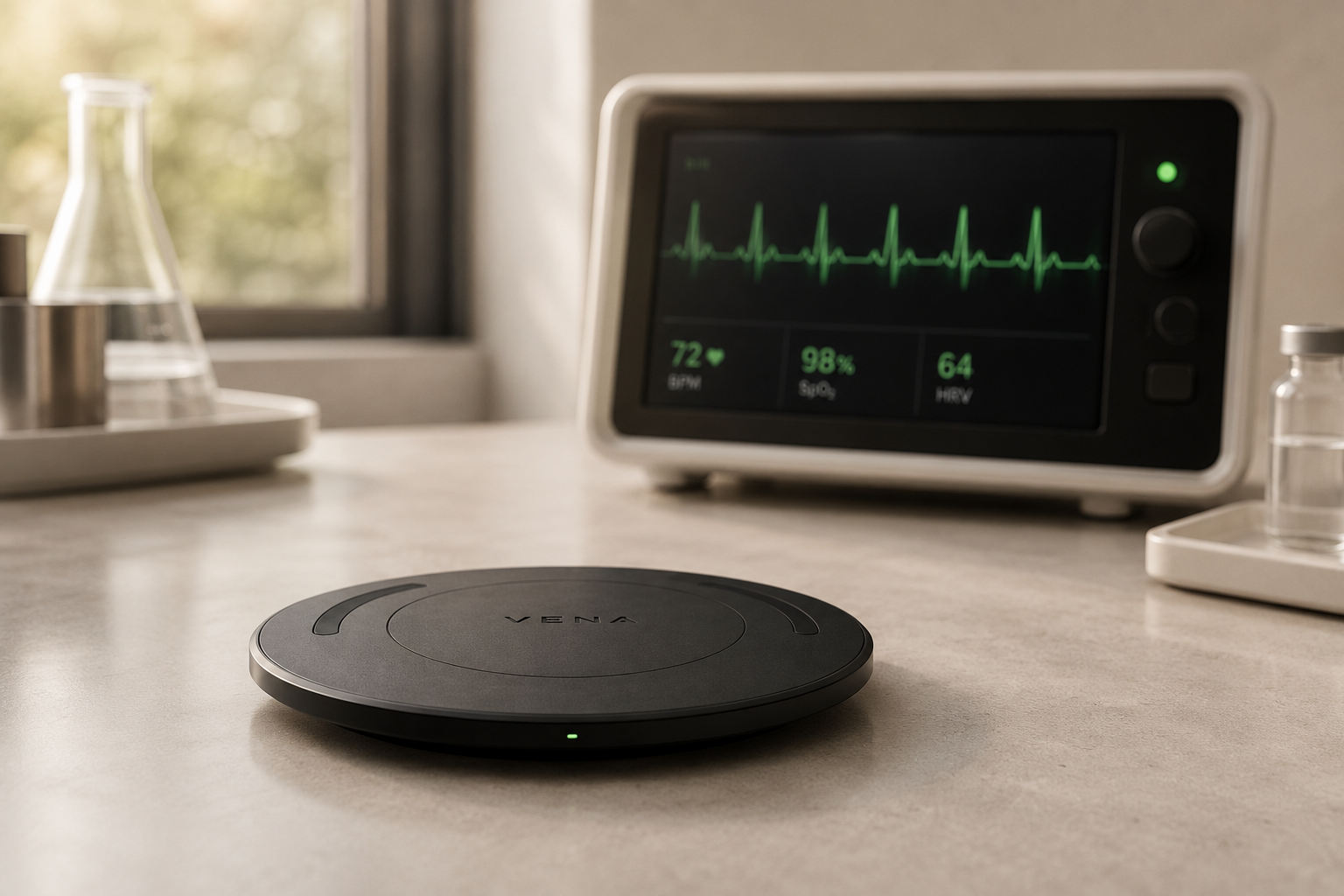
Green is the wrist channel.
At the wrist, the green LED returns roughly eight times the pulse signal of infrared, which is why every serious wrist sensor leans on green. Vena drives green hard and keeps red and infrared for blood oxygen.
The watch site holds up.
We compared five placements around the wrist. The dorsal site, where your watch already sits, tied for the strongest signal of all of them. Hiding behind the watch costs nothing.
The hard part is contact, not the sensor.
A clean, lockable signal needs engineered optical contact and a purpose-built board. That is exactly what our first custom PCB delivers, with the optical front end and skin contact designed in.
We publish before we ship.
We hold ourselves to numbers, not adjectives. Accuracy results against a reference device go public before the first unit leaves.